How to design a Fakémon and its evolutions
Start with an animal or object, choose one feature that makes it memorable, and decide how that feature could grow. You do not need a long description. A creature with a clear shape is easier to develop than one carrying every idea at once.
Start with something you can picture
Choose a fox, moth, turtle or another familiar starting point. Give it a type and a defining feature: a turtle with a sprout on its shell, for example, or a moth with frost-edged wings. The animal gives you a body to work with; the feature gives the creature its identity. Try a short description like this in the Creature Lab:
A small orange fox with a cream face, large pointed ears and a flame-shaped tail.
This is a starting description, not a recipe guaranteed to reproduce the examples below. Choose the result whose shape you like before adding more details.
Give the line something to keep
Write down three things you want to recognise in every stage. For this fox, they are the pointed ears, the orange-and-cream palette and the flame motif. A change that strengthens those features tends to feel more connected than a change that replaces them. The middle stage should do more than get bigger. Let a small feature start developing into its adult form. Keep the most dramatic version for the final stage, and compare all three at thumbnail size. Can you still tell that they belong together?
A worked example: three fire fox forms
These are existing Nokémon showcase designs. The notes describe what is visible in the examples, not promises about every transformation.
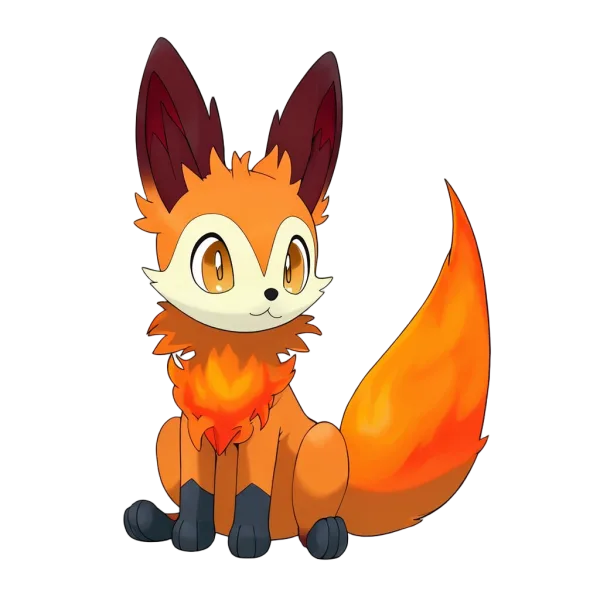
1. Start small
The first fox has a round face, large ears and one bright tail. The orange coat and cream face make a simple palette you can recognise at a glance.
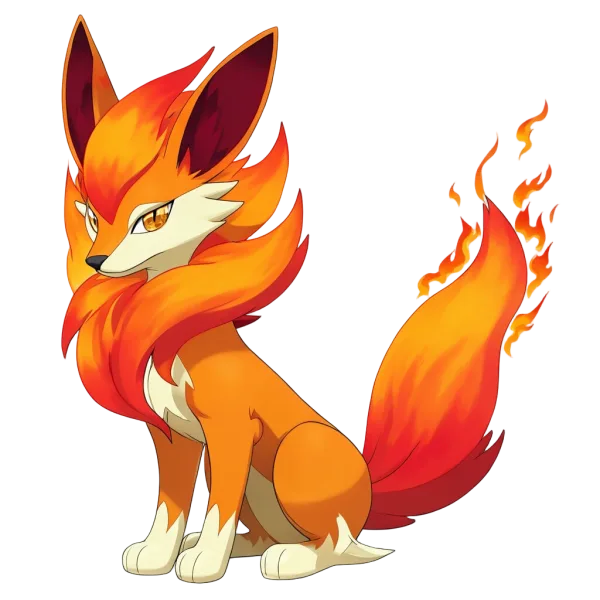
2. Give the middle form a job
The middle form develops the flame into a larger mane. Its narrower face and longer legs suggest growth without abandoning the fox. The single tail still connects it to the first form.
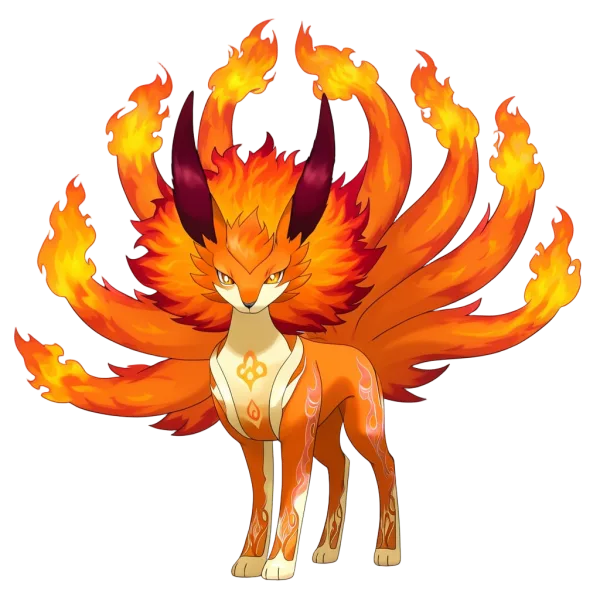
3. Extend the defining feature
The final form spreads the tail motif into a fan of flames. The silhouette is much broader, while the pointed ears, warm palette and cream markings still connect the family.
Choose the change you actually want
- Modify: request a focused change, such as a longer tail. It returns one version for one credit. Check the whole creature, since other details may shift a little too.
- Evolve: explore another stage. Ask for a specific development, such as a larger flame mane, rather than only saying "make it stronger." One credit gives four versions to compare.
- Retype: explore a different element. An icy fox can use frost where the fire form used flames. Single-type Retype gives four versions for one credit. Multi-type actions have a different total, shown before you submit.
Look for Open in Lab on a creature to see whether it supports these tools. Older creatures may not be compatible. No transformation can promise that every other detail stays unchanged.
Compare before you keep going
Check the face, feet, ears and tail as well as the feature you requested. If an evolution no longer looks related, try a simpler direction instead of building on a result you do not like. More features are not always an improvement. When you have creatures you want to keep together, arrange them in your Field Guide. That gives you a place to compare the line and share it as a collection.
Try a creature of your own
Daily Discovery offers free reveals without an account. To design from your own description, open the Creature Lab. Custom creation needs an account and credits; the questions on the homepage explain how they work.